
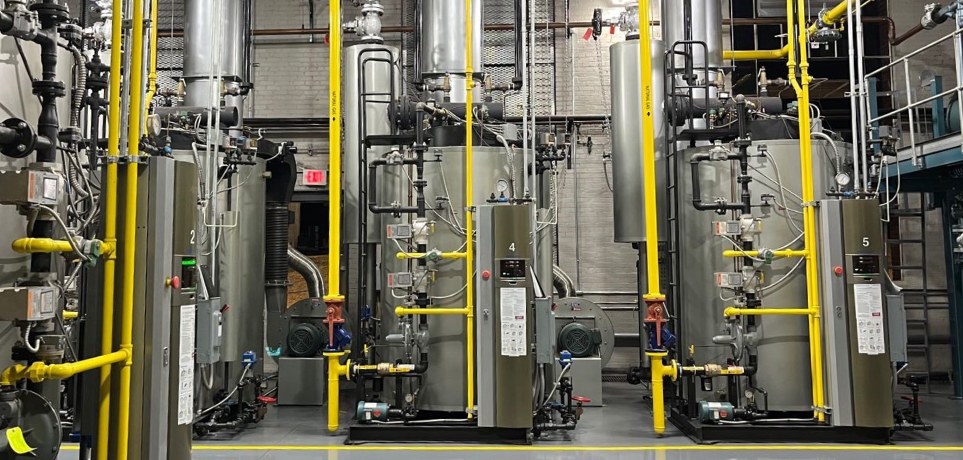
The Key to a Green Future is Boiler Efficiency
As corporations and governments add green targets and efficiency grants to their 5 and 10-year plans. Boiler efficiency can be a key factor in a facility’s overall move to sustainability. A boiler’s fuel-to-steam efficiency can tell you a lot about how efficient a particular boiler is at turning fuel into steam. Knowing the fuel-to-steam efficiency of a particular boiler helps to give you an idea of the operating costs of that boiler. With that in mind, a boiler’s fuel-to-steam efficiency rating is not something to overlook.

The fuel-to-steam efficiency of a boiler is the ratio of BTU (British thermal unit) output divided by BTU input, with the input being the fuel used to power the boiler and the output being the steam generated by the boiler. The higher the fuel-to-steam efficiency, the more steam you get compared to the fuel needed to create that steam. In essence, the higher the boiler efficiency rating, the more steam you get for your dollar. With the rising cost of fuel and the many incentives to lower your fuel usage, there is a great incentive for facilities that rely on industrial boilers to maximize their fuel-to-steam efficiency as much as possible as a way to cut costs.
The Miura Difference
Miura has become one of the best companies manufacturing boilers with high fuel-to-steam efficiency. The EX and LX models of Miura’s water tube boilers have a fuel-to-steam efficiency rating of 85%. Whereas the average fire tube boiler only offers 83% fuel-to-steam efficiency. That may seem like a small difference, but a 2% difference in efficiency creates fuel cost savings between 10 and 40%. Most facilities that switch to Miura boilers from conventional fire tube boilers report saving roughly 20% on fuel and energy after making the switch.
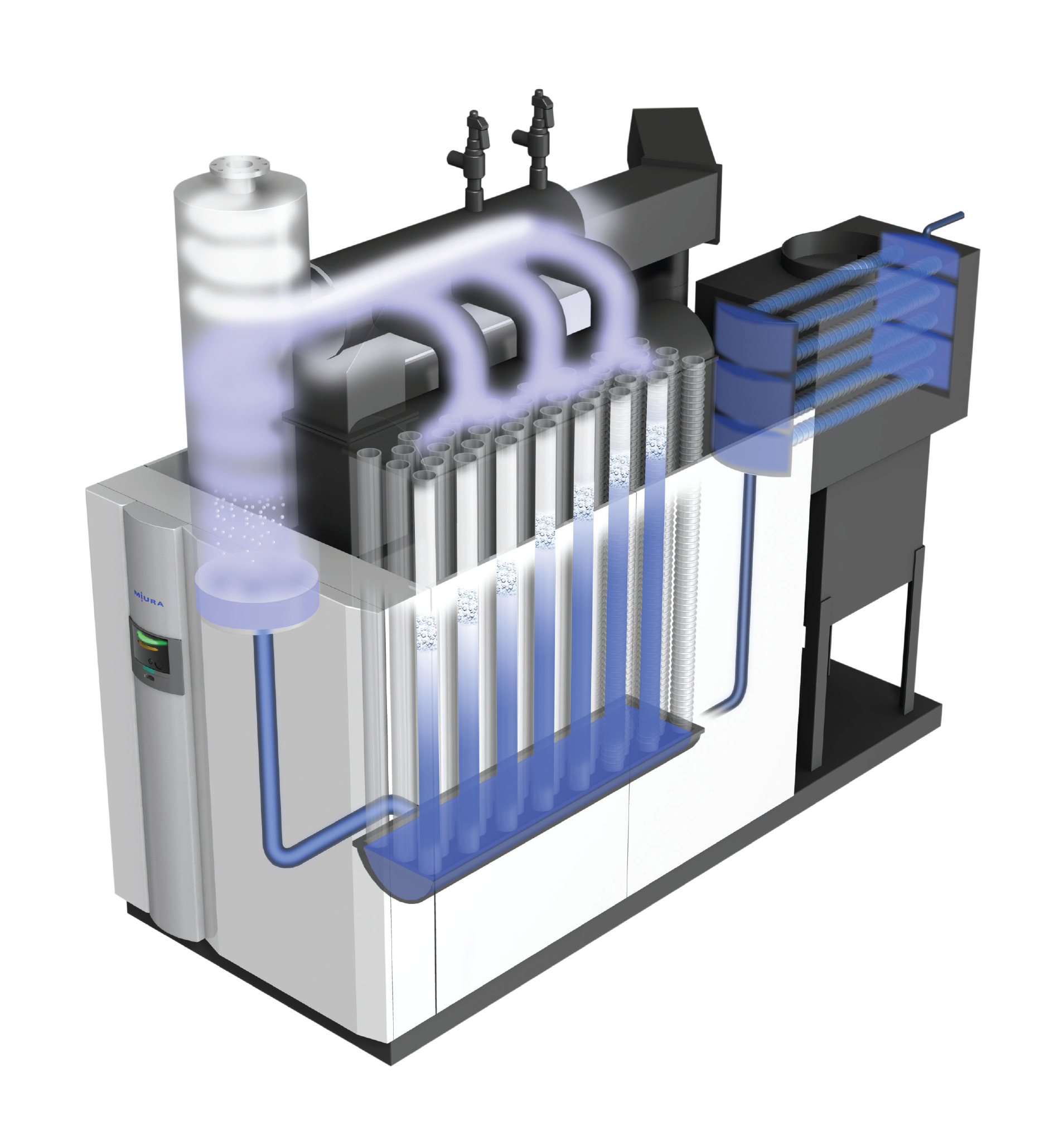
The key to this difference is a series of design choices Miura has made to help increase the fuel-to-steam efficiency of their boilers. For instance, Miura boilers have roughly 10 percent of the water volume of fire tube boilers. This helps reduce the fuel needed to produce steam, boosting the boiler’s efficiency. Miura boilers are also designed to be turned on and off as needed. Conventional fire tube boilers typically run idle when not needed, which wastes fuel without producing steam. However, Miura boilers can start producing steam from a cold startup within five minutes, eliminating this waste and improving fuel-to-steam efficiency.
Many factors are important to weigh when deciding on a new industrial boiler. However, fuel-to-steam boiler efficiency is not something that should be overlooked. Finding a boiler that excels in this area can go a long way toward saving on operating costs with your new boiler.